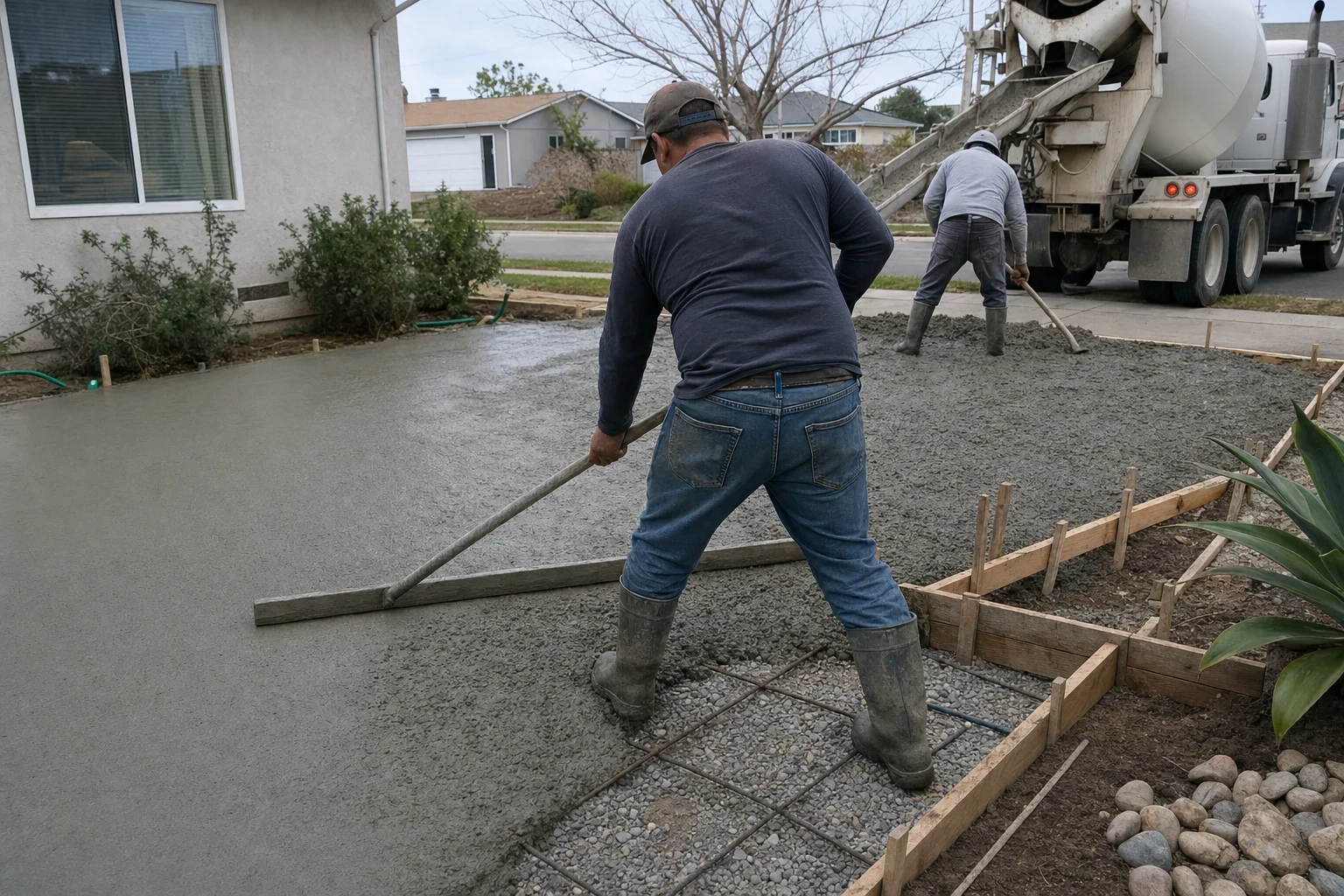
Concrete Driveways, Patios and Pool Decks in Tustin
We pour new driveways, patios, stamped concrete, pool decks, slabs and walkways for homes in Tustin, Irvine and North Tustin. Every job starts with a graded, compacted base and ends with a finish and color picked to shed water and stay cooler under the afternoon sun.
- 15+ years in business
- Licensed by California's CSLB
- 1-year warranty
- Written line-item estimates
Concrete Work for Every Part of Your Home's Exterior
Our company has been pouring concrete for more than 15 years, we hold a license from the California State License Board (CSLB), and every finished job is backed by a 1-year warranty. Out front we build driveways, walkways and sidewalks, and entry steps and stairs. Behind the house we pour patios, pool decks, courtyards, side yards and full concrete backyards, with stamped concrete as an option on most of them. We also place garage floors, general-purpose concrete slabs and RV parking pads. A pad that carries a motorhome needs more depth and more steel than a patio under a dining table, so we size the thickness, rebar and joint spacing to the weight each pour will actually carry.
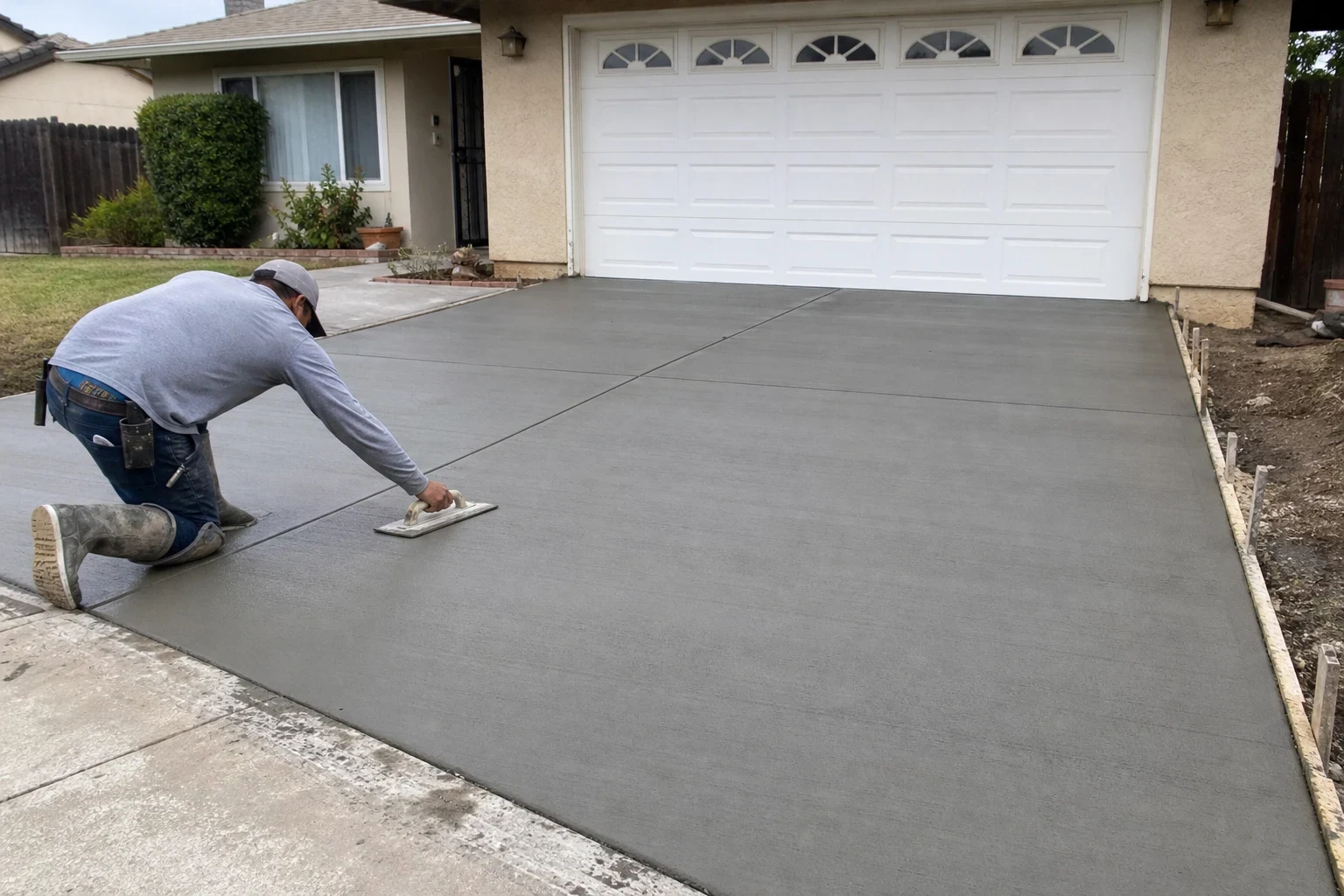
Driveways
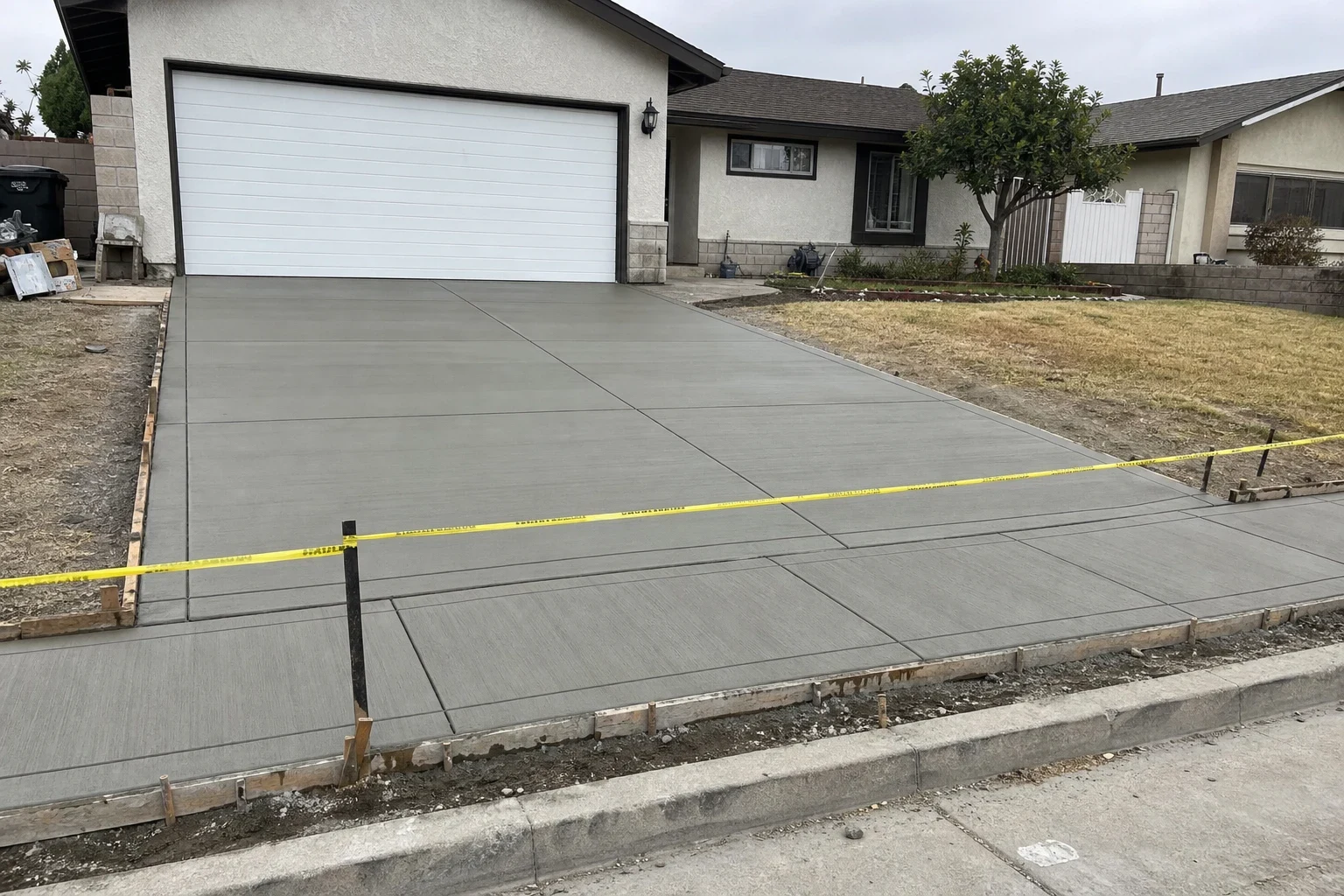
Full driveway replacement in concrete, from tear-out and base prep to rebar, control joints and a broom finish.
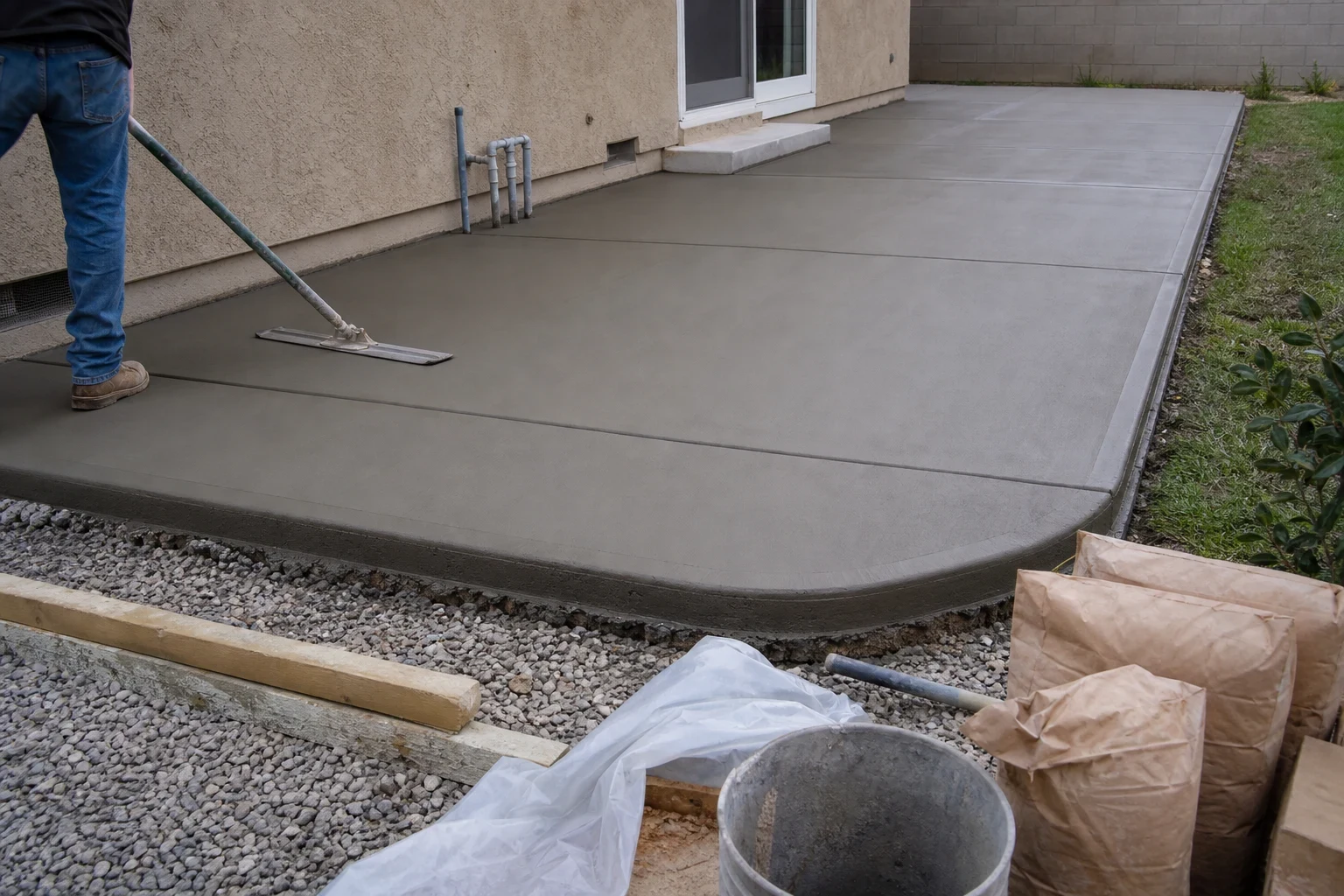
Patios
New concrete patios with a compacted base, proper slope away from the house, and a light finish that stays comfortable in summer sun.
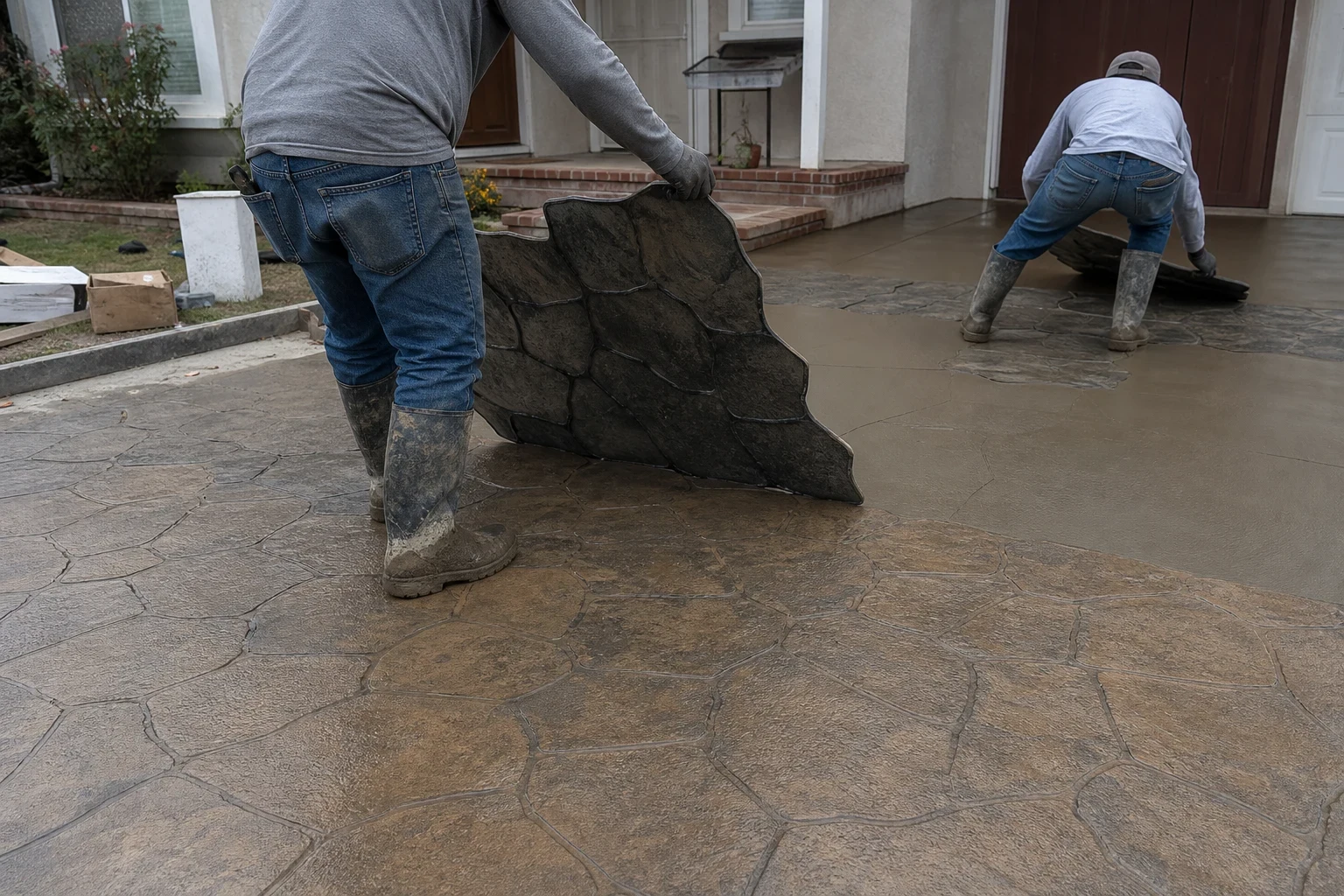
Stamped Concrete
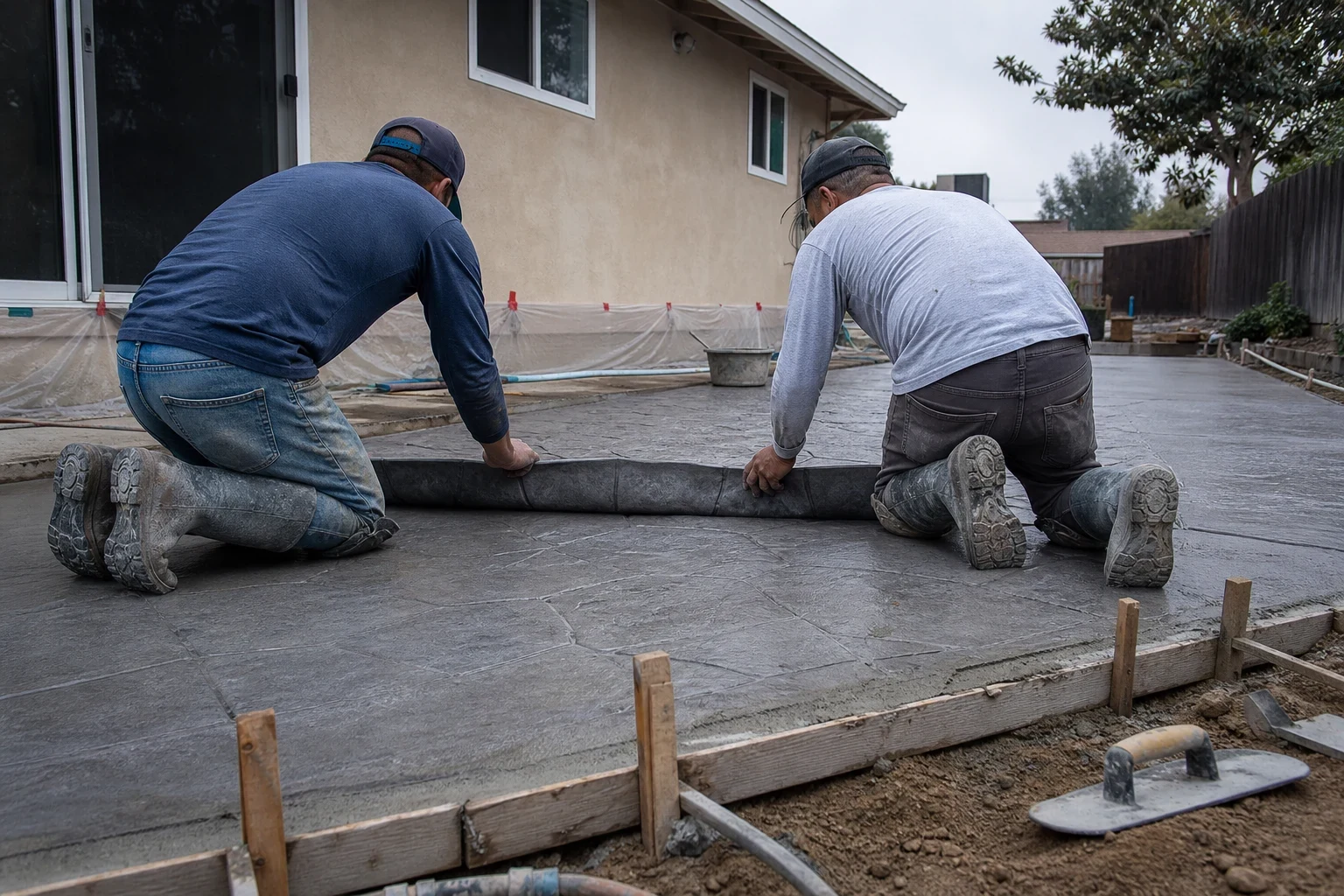
Stamped patios, walks and driveways with integral color, proper joints and a sealer matched to how the surface will be used.
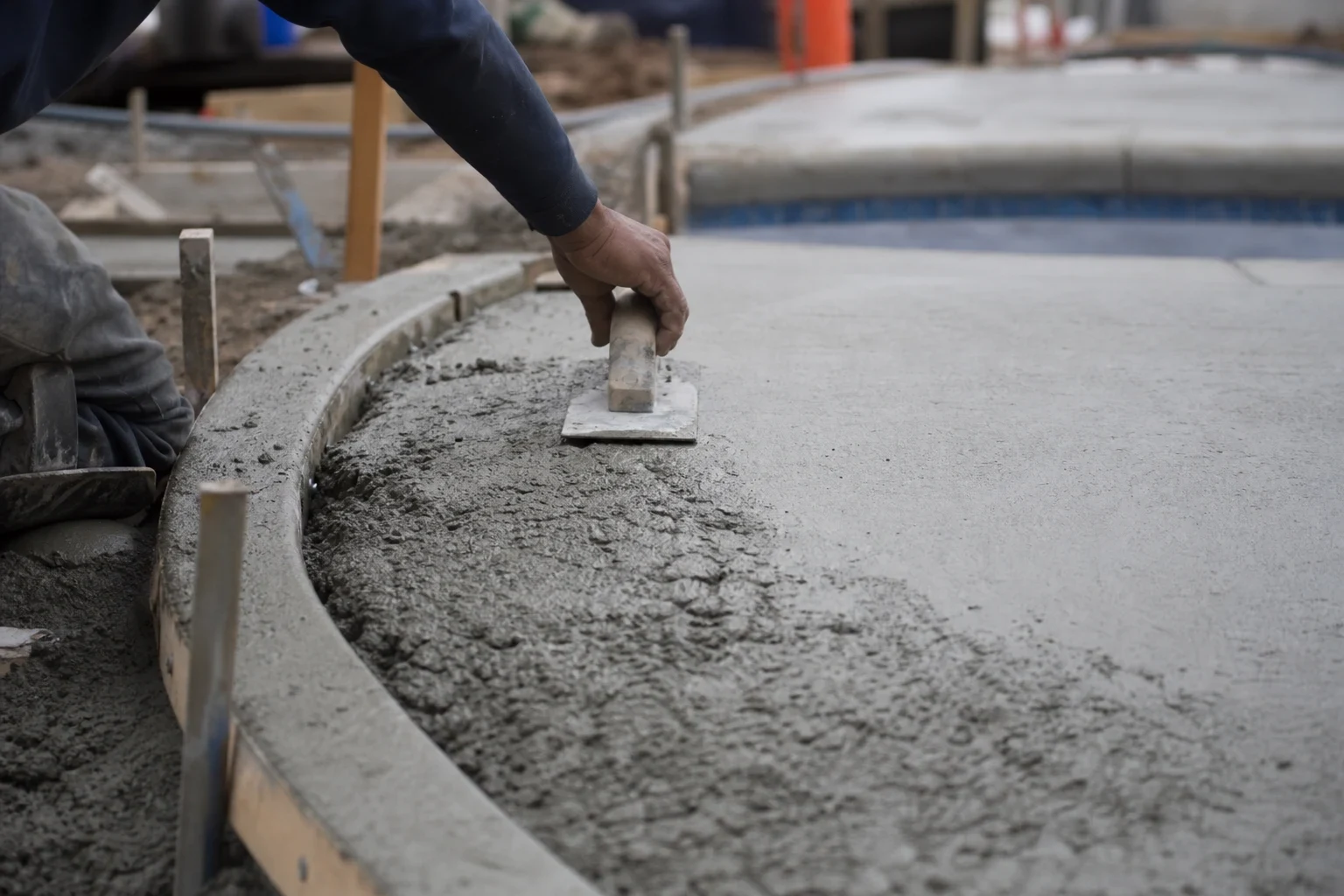
Concrete Pool Decks
New pool deck concrete with proper drainage slope, a grippy wet-feet finish and lighter surfaces that hold less afternoon heat.
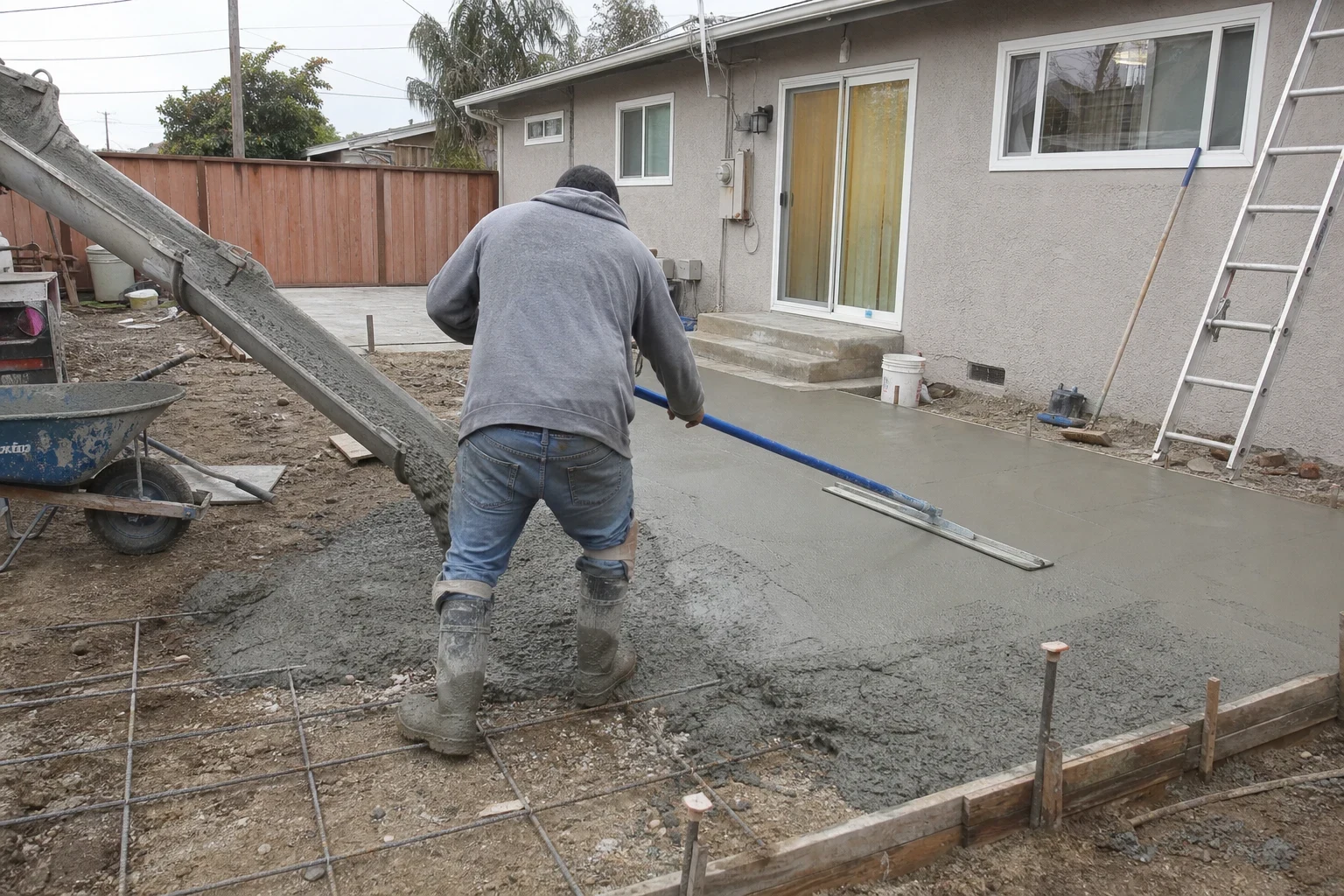
Concrete Backyards
Full backyard concrete layouts with proper base, slope and joints, finished in light tones that hold less heat than dark surfaces.
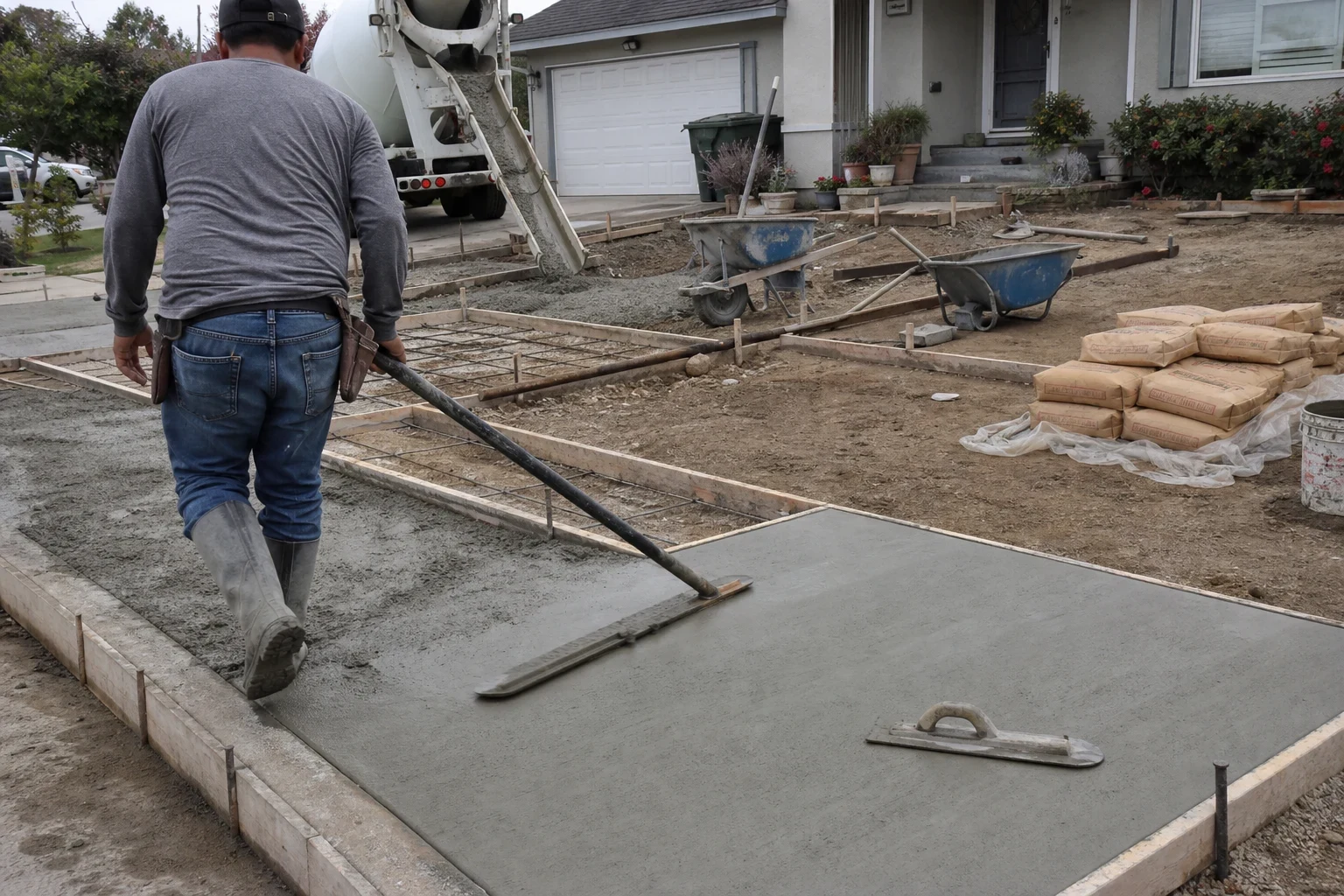
Concrete Slabs
Reinforced pads for sheds, spas, AC condensers and work areas, built on compacted base and sloped to shed water away from your home.
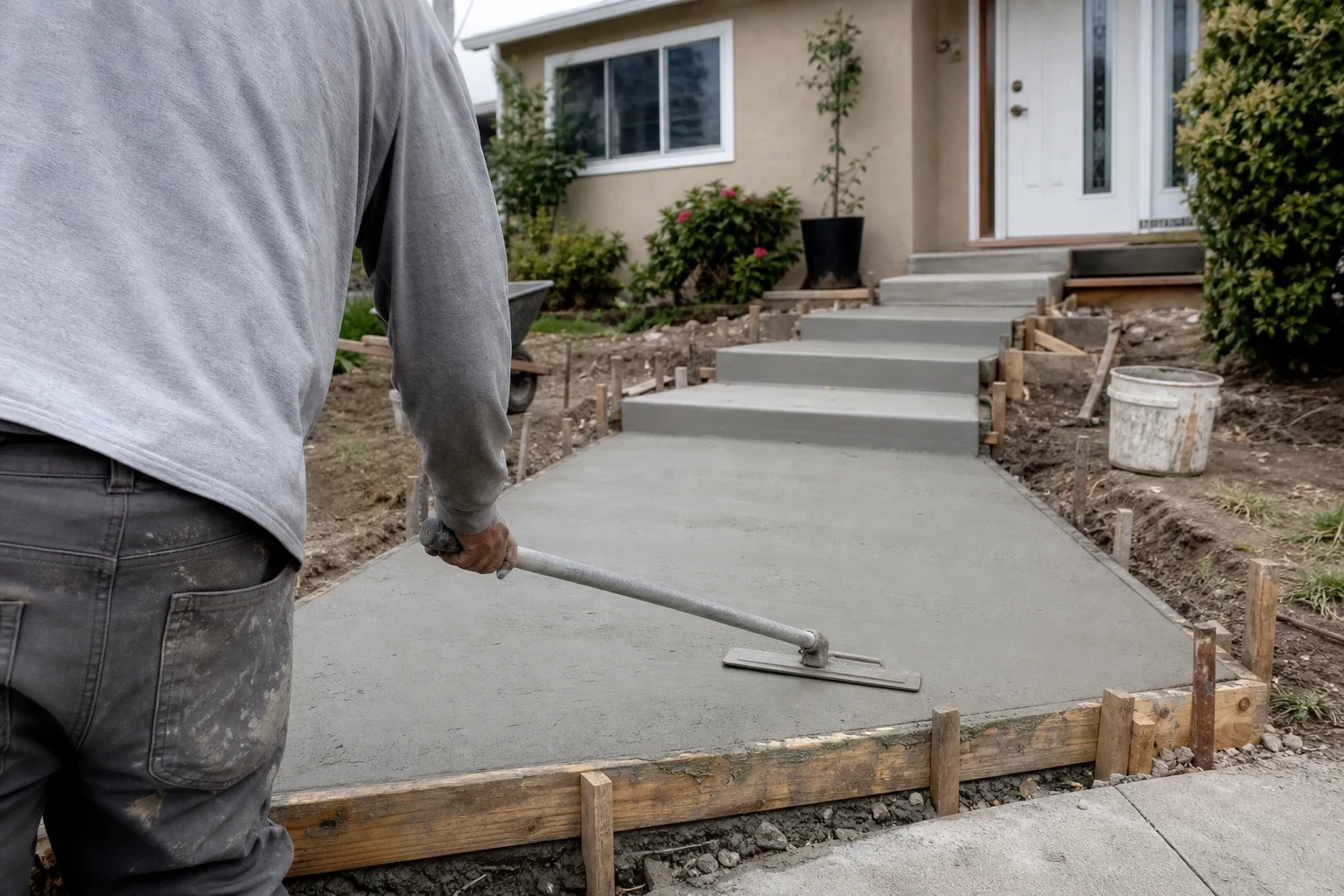
Steps and Stairs
New front stoops, garden stairs and porch steps formed with even risers, rebar tied to your foundation and a pitch that sheds water away from the door.
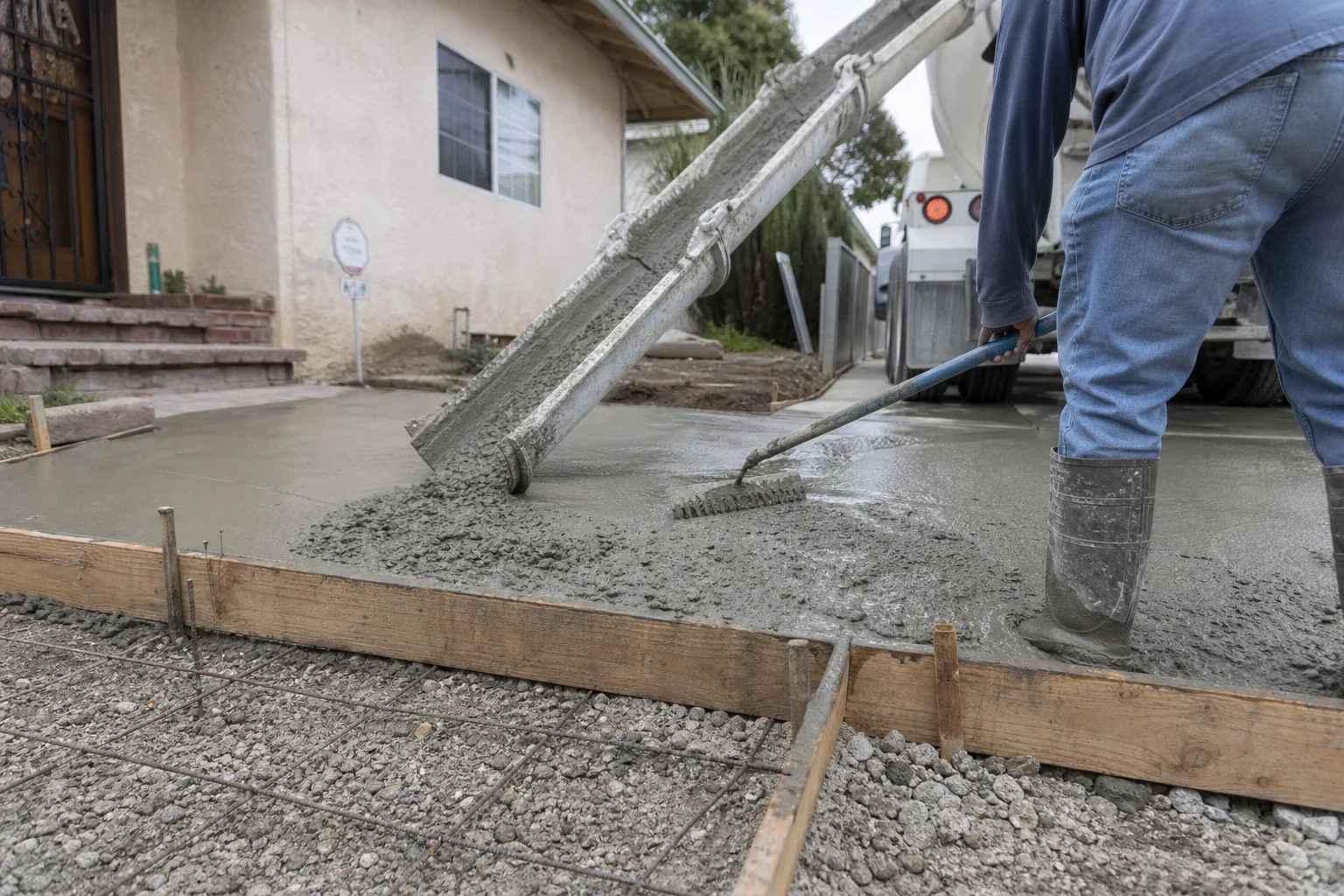
Concrete Side Yards
A sloped concrete path down the narrow side of your home that moves water off the foundation, keeps weeds out and gives trash bins and the AC unit solid footing.
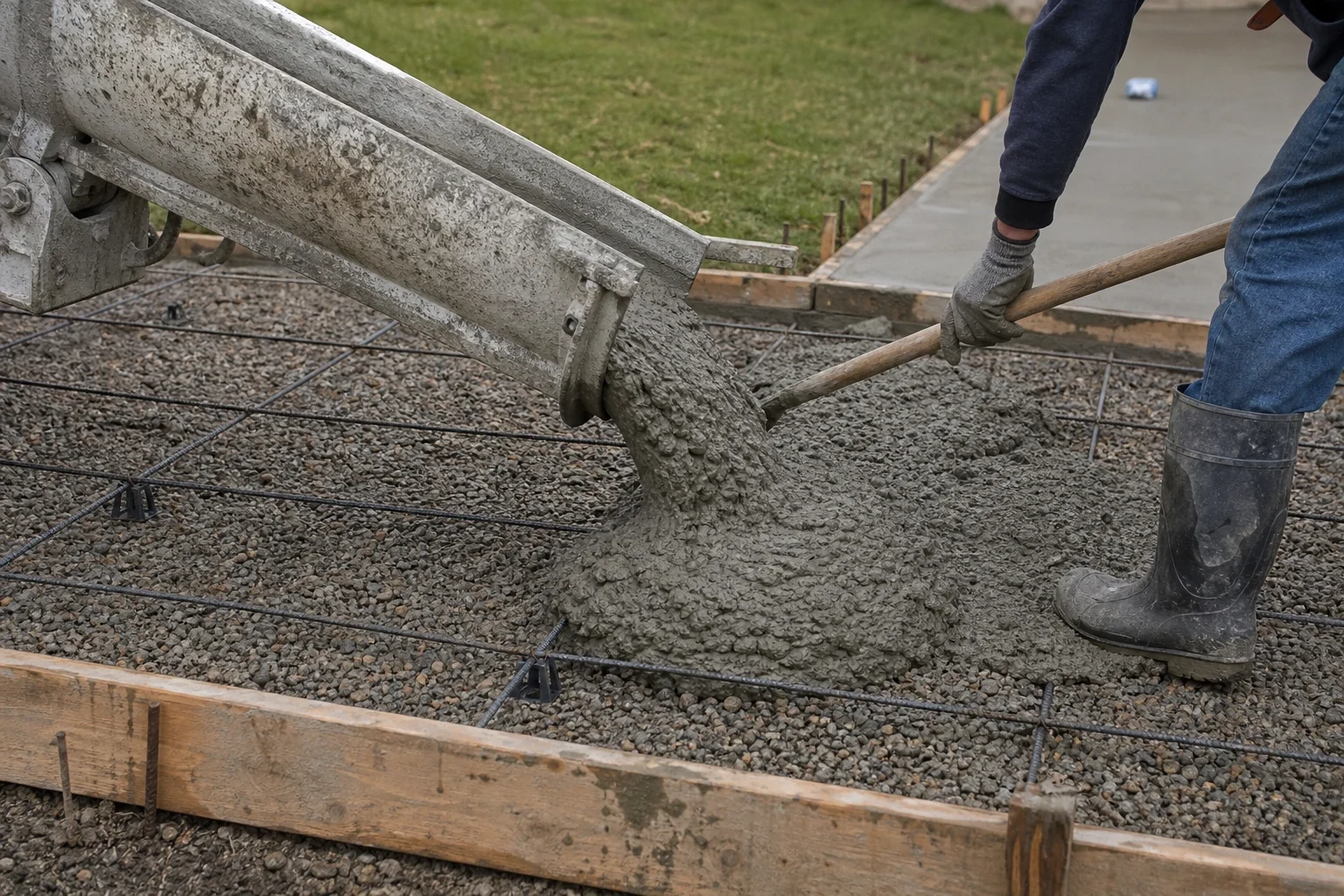
RV Parking Pads
Reinforced RV pads poured thick enough for a loaded motorhome, level for your slides and fridge, and sloped so water drains away from your home.
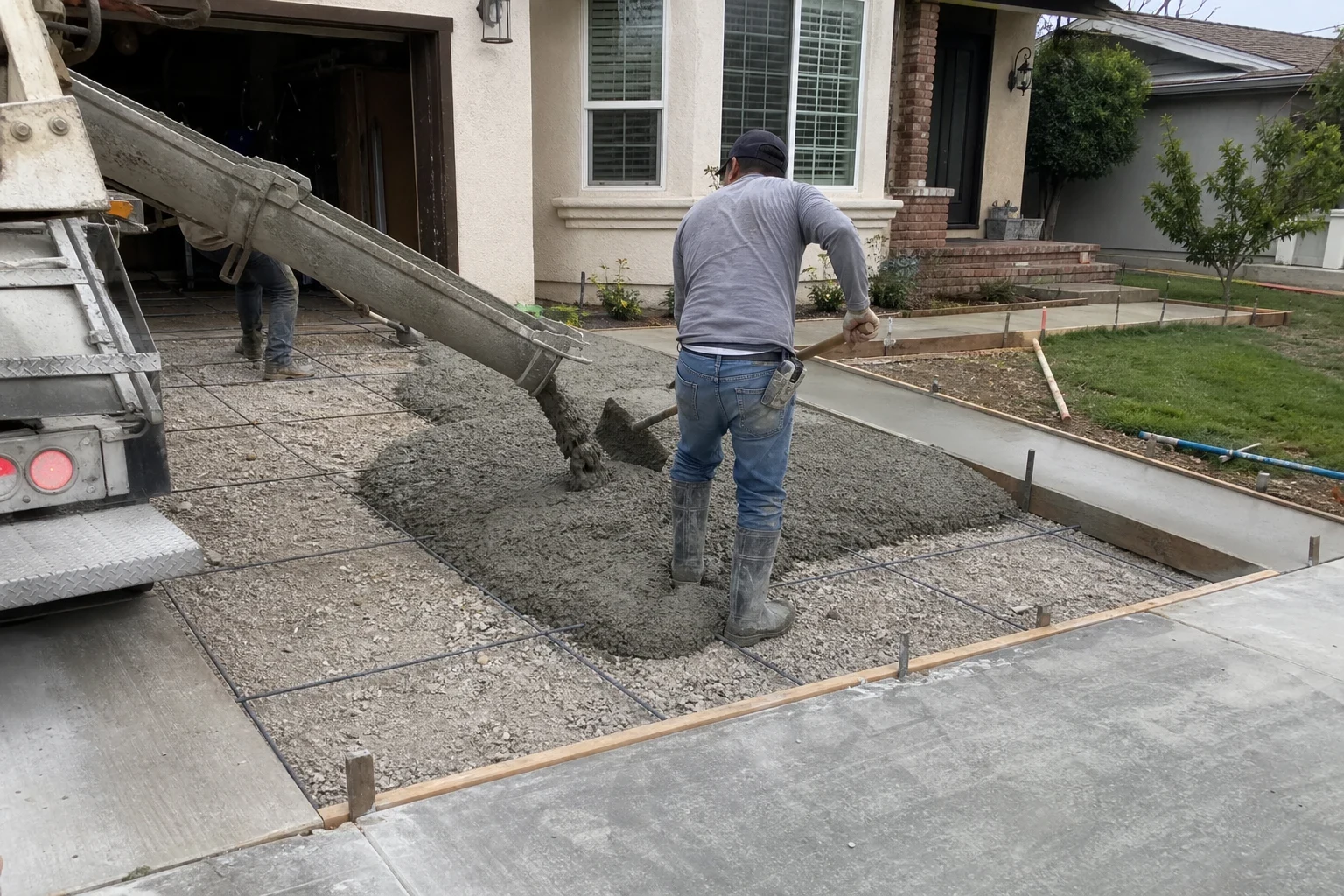
Garage Floors
Full garage slab replacement with a compacted base, vapor retarder, steel reinforcement and planned control joints, sloped so water runs out the door.
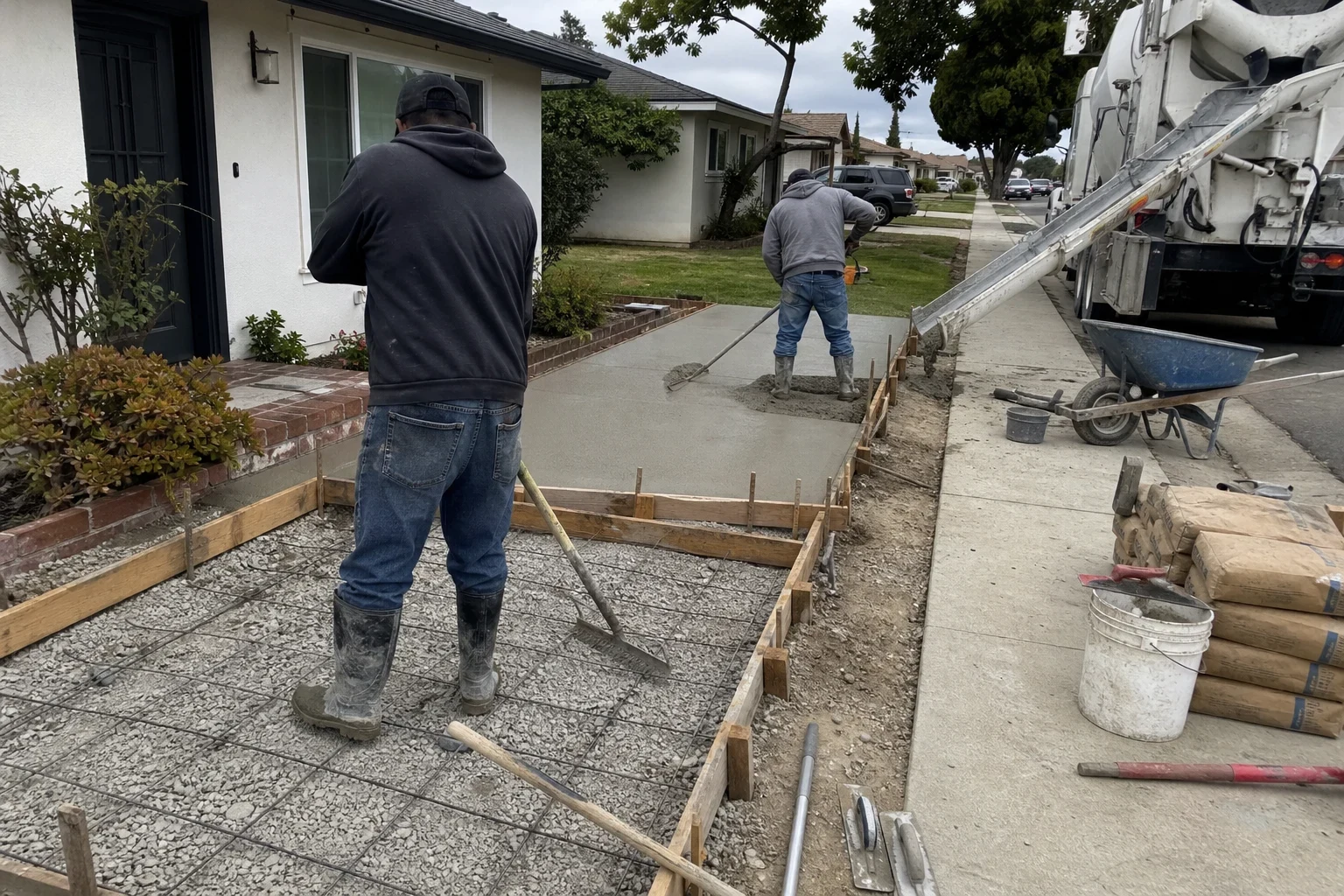
Concrete Courtyards
Enclosed courtyard slabs built with drainage away from your walls and finishes that hold less afternoon heat against the house.
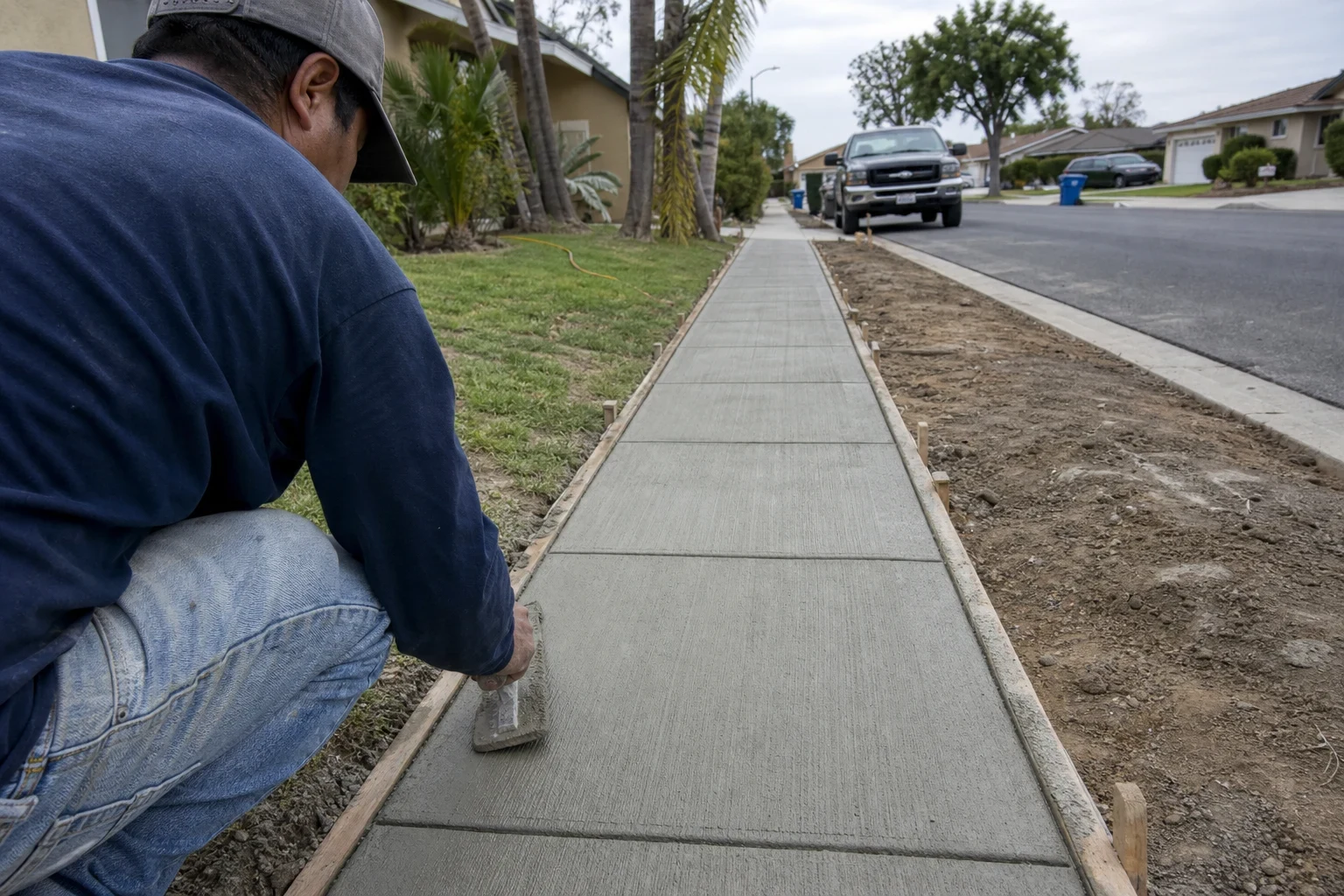
Walkways and Sidewalks
New concrete walkways and sidewalks with a compacted base, a slope that carries water away from your home and joints placed where cracks should go.
Where We Pour
We are based in Tustin and work throughout the surrounding area, including North Tustin, Irvine, Santa Ana, Orange and Costa Mesa. We also take jobs in Anaheim, Garden Grove, Fountain Valley, Lake Forest and Laguna Woods.
- Tustin
- Irvine
- Santa Ana
- Orange
- North Tustin
- Anaheim
- Garden Grove
- Costa Mesa
- Lake Forest
- Fountain Valley
- Laguna Woods
If your home is nearby and not listed, give us a call and we will tell you whether we can schedule your project.
How We Build Concrete That Holds Up
Most concrete failures begin in the ground underneath or during the first few days of curing. Those are the stages we watch most closely.
Base prep before anything else
We dig to the depth the slab needs, pull out soft soil and roots, and compact a gravel base in layers. Clay soil swells when it gets wet and shrinks as it dries, and a firm, well-compacted base keeps that movement from breaking the slab above it.
Surfaces that run cooler
Plain gray concrete reflects much more sunlight than asphalt, and pale integral colors reflect even more. On a pool deck or a patio beside a west-facing wall, that gives you a surface you can cross barefoot in summer and less heat pushing into the wall and the rooms behind it.
Slope that moves water away
We pitch every slab so runoff heads away from your foundation and into drains or planting beds, usually about a quarter inch of fall per foot. Water that never reaches the footing cannot undermine the slab or dampen the garage.
Joints placed on purpose
Concrete pulls in as it cures, and it will crack somewhere. We saw-cut control joints at set intervals and at inside corners so the crack follows the cut line, where it stays hard to spot.
A clear answer on scope
When a smaller pad or a simple broom finish fits your needs, we tell you. Your estimate is itemized line by line, so every dollar is tied to a specific piece of the job.
What Moves the Price of a Concrete Job
Concrete is priced by the job, not by a flat rate. Two driveways of the same size can differ a lot once you account for what has to come out, what goes underneath and how the truck gets to the forms. These are the factors we walk you through.
We visit, measure and look at the soil and access before we price anything. Your estimate lists each line item so nothing shows up later that you did not see first.
- Area and thickness
- A four-inch patio slab uses far less material than a driveway or RV pad poured thicker to carry vehicle weight. Square footage and depth together set the volume of concrete ordered.
- Removal of old surfaces
- Breaking out old concrete or asphalt, loading it and hauling it to a recycler adds labor and disposal cost. Lawn or loose soil is quicker to clear.
- Access to the pour
- When a truck can back up to the forms, the pour goes fast. Narrow side yards and backyards behind the house may need a concrete pump or wheelbarrows, which adds equipment or labor.
- Soil and grading
- Sloped lots, soft spots and expansive clay can call for extra excavation, imported base rock or more compaction before forms go in.
- Reinforcement and finish
- Rebar grids, fiber mesh, integral color, stamped patterns and sealers each add material and time. A broom finish is the simplest; stamped concrete with release color and sealer takes the most hands on pour day.
- Permits
- Work that touches the public sidewalk, curb or driveway approach usually needs a city permit and inspection. We include that step in the estimate when it applies.
About Concrete Contractor Tustin
We are a local concrete company that builds new flatwork and structural slabs for homeowners. Our work is mostly outside your home: the driveway you park on, the patio you eat on, the deck around your pool and the path from the gate to the front door.
We care about the parts nobody sees once the job is done. Base depth, compaction, rebar placement, slope and curing decide whether a slab stays flat and crack-free for decades or starts heaving in a few years. We explain those choices in plain terms so you know why we recommend them.
We also think about how the finished surface behaves in summer. A lighter color on a pool deck, a patio placed to shade a hot wall, or a sealed garage floor that stays clean and keeps dust down are small decisions that make your home more comfortable to live in.
- License
- Licensed by the California State License Board (CSLB)
- In business
- In business 15+ years
- Warranty
- 1-year warranty
How a Concrete Job Runs
Nearly every residential pour moves through the same stages. This is what to expect, in order.
- 1
Phone call and site visit
You describe the project and we book a time to come look. On site we take measurements, read the existing slope and drainage, and figure out where the truck or pump can set up.
- 2
Written estimate
Your estimate breaks out demolition, base rock, reinforcement, concrete, finish and any permit as separate lines. We walk you through the thickness and finish we recommend and why each fits the job.
- 3
Demo, grading and forms
Old material comes out, the subgrade is shaped and the base is compacted, then forms are staked to the planned fall. Rebar or wire mesh is propped up on small supports so the steel ends up mid-depth in the pour instead of lying on the dirt, where it would do nothing.
- 4
Pour, finish and cure
The crew places the concrete, screeds it level, finishes the surface and saw-cuts the joints once the slab can take it. On hot days or during dry Santa Ana winds we mist the surface or spray a curing compound so the top does not lose moisture too quickly and craze.
- 5
Cleanup and walkthrough
We strip the forms, haul off the debris and walk the new concrete with you. Before we leave, you know when it is safe for people and when it is safe for cars.
Questions We Hear Most
Something not covered here? (714) 733-1781
Will my new concrete crack?
Every slab shrinks as the water in the mix leaves it, so a few hairline cracks are expected. We decide where they go by saw-cutting control joints on a planned grid, which gives the slab a weak line to crack along out of sight. The cracks worth worrying about come from settling and heaving, and a well-compacted base with the right steel is what prevents those.
How soon can I walk or drive on it?
Light foot traffic is normally okay after one to two days. Passenger cars should wait about a week, and trucks or RVs need longer than that. Concrete keeps curing and gaining strength for around four weeks, so we give you specific dates for your slab at the walkthrough.
Does lighter concrete really stay cooler?
Yes. A light gray or pale integral color bounces back more sunlight than dark color or asphalt, so less heat builds up in the surface. You notice it most on pool decks and patios where people go barefoot, and along walls that take the afternoon sun, since a cooler slab radiates less heat toward the house.
Do I need a permit?
A patio or backyard slab that stays on your own property generally does not need one. Once the work connects to the public sidewalk, the curb or the apron where your driveway meets the street, the city typically requires a permit and an inspection. We flag that during the site visit, include it in your estimate and take care of it for you.
What is the difference between broom finish and stamped concrete?
A broom finish is dragged with a stiff-bristle broom while the surface is still soft, leaving fine ridges for grip. It is the most straightforward finish. Stamped concrete is colored and pressed with textured mats to mimic stone, slate or brick, which takes more labor on pour day, and it needs a fresh coat of sealer every few years to hold its color.
Do you offer a warranty?
Yes. Our work is backed by a 1-year warranty, and we explain what it covers when we hand you your estimate.
How do I get a quote?
Give us a call and describe what you have in mind. We schedule a visit to measure and look at the soil, slope and access, then put together a written estimate broken out by line item. Phone is the way to reach us.
Ready to Plan Your Concrete Project
Tell us what you want to build and where it goes. We will measure, check the soil and drainage, and give you a written estimate you can read line by line.